Jasmine Cadena
Investigating how plant-vector-microorganism interactions shape disease dynamics and host plant resistance in agricultural systems.
Scientific snapshot
PhD candidate at Agroscope Changins (Switzerland) and Univeristy of Geneva
Defence scheduled on the 18th February 2027
Plant–vector–microorganism interactions • Insect ecology and behaviour • Host plant resistance • Disease epidemiology
Grapevine-Scaphoideus titanus-Flavescence dorée phytoplasma • Fungal endophytes and mycoviruses
Controlled laboratory and quarantine greenhouse experiments • Insect behavioural assays • Insect fitness assays • Electropenetration graph (EPG) • Field epidemiology • Population genetics • SNP marker development and genotyping • Molecular diagnostics (DNA/RNA extraction, PCR, RT-PCR) • VOC extraction • Statistical analysis and modelling • GIS and spatial data analysis • Fungal bioassays
Disease transmission ecology • Plant-mediated effects on insect vectors • Mechanisms of host plant resistance • Plant chemical ecology • Beneficial microorganisms and biological control
BSL-2 laboratories • Quarantine greenhouse facilities • Field epidemiology studies • Controlled laboratory experiments
- 2026 - Flavescence dorée phytoplasma infection represses the transcription of the lignin pathway in Vitis vinifera cv. Pinot noir without compromising monolignol accumulation
- 2026 - High-resolution SNP genotyping provides insight into the introduction and dissemination of Grapevine flavescence dorée phytoplasma in Switzerland
- 2022 - The microbiota of the grapevine holobiont: A key component of plant health
My journey
My scientific journey did not follow a conventional path. After an initial career in language teaching and wine tourism, I returned to university driven by a desire to better understand the biological processes underlying agricultural systems and to contribute, in the long term, to more sustainable approaches to crop management.
My previous professional experiences as a wine tourism project manager and language teacher provided valuable experience in project coordination, budget management, public communication and working with diverse audiences. They also taught me the importance of organisation, adaptability and teamwork, skills that continue to shape how I approach research today.
Through my work in organic wineries and later through volunteering on organic farms, I also developed a growing interest in agricultural systems and gained first-hand insight into some of the challenges faced by growers. These experiences strengthened my interest in knowledge exchange between science and practice and continue to shape the questions that motivate my research.
My early research focused on plant-microorganism interactions in agricultural systems. As my interests evolved, I became increasingly fascinated by the complexity of interactions involving multiple organisms, leading me to study mycoviruses and their relationships with fungal hosts. This interest in biological interactions across different levels of organisation eventually led me towards the study of plant-vector-microorganism systems.
Today, my research explores how insect behaviour, host plant traits and microbial interactions shape biological processes relevant to agricultural systems. Although my current work focuses on the grapevine-Scaphoideus titanus-Flavescence dorée pathosystem, my scientific interests extend beyond a single crop or disease.
My long-term research goal is to elucidate how interactions among plants, insect vectors and microorganisms drive disease dynamics and to identify biological mechanisms that can be leveraged for more sustainable crop protection. More broadly, I am interested in uncovering naturally occurring processes that influence pest and pathogen pressure and in translating this knowledge into practical solutions for agricultural systems.
Languages
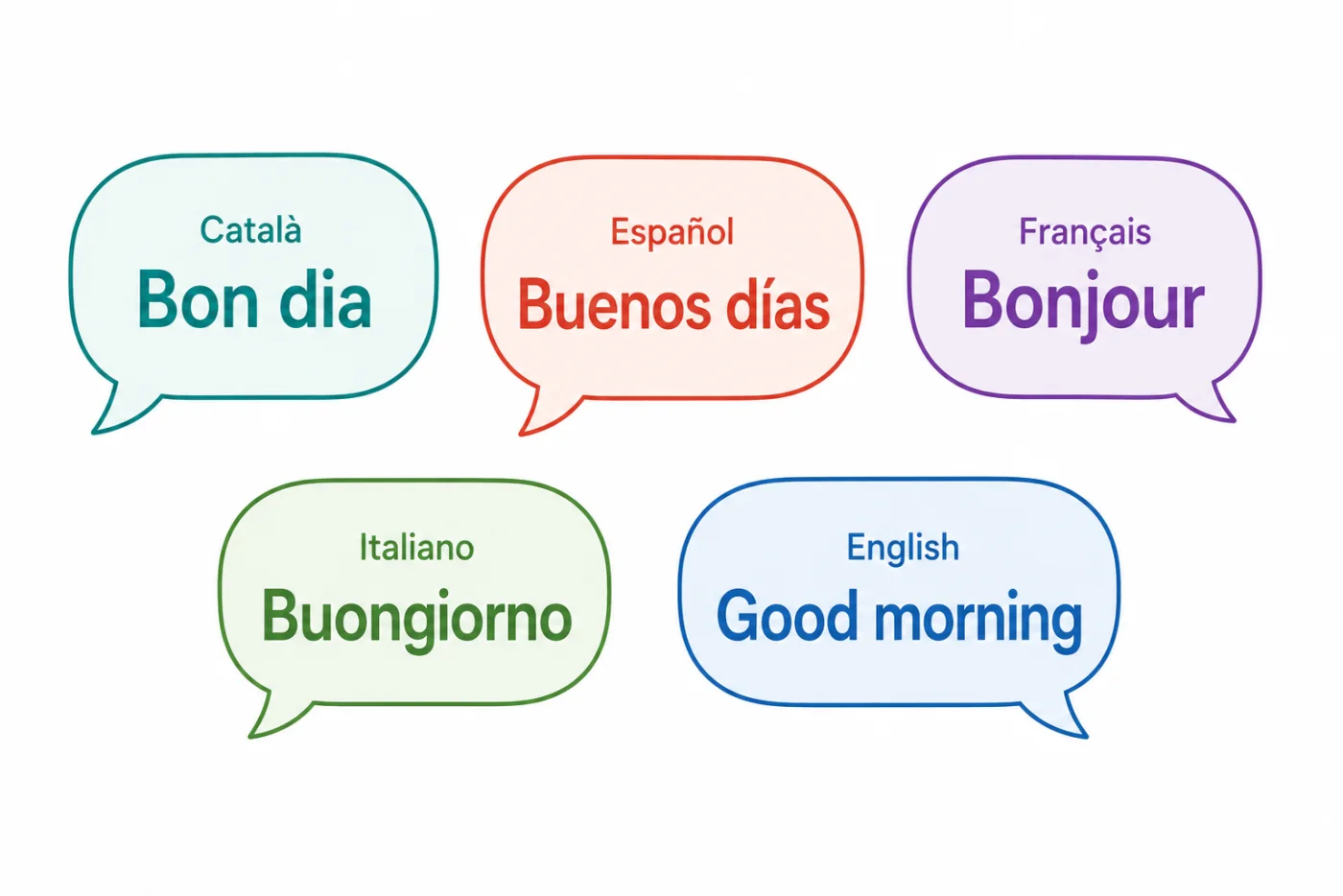
Languages have been a central part of my professional and personal life for many years. From my studies in Translation and Interpretation to my work in language teaching, Catalan proofreading and wine tourism, communication across languages and cultures has always played an important role in my career.
I am a native speaker of Catalan, bilingual in Spanish and French, and regularly work in English and Italian in academic and professional settings. Over the years, I have taught, presented and communicated scientific and technical information in all these languages, allowing me to engage with a wide range of audiences across different professional and cultural contexts.
I also have a basic knowledge of German.
Beyond research
Human towers
For more than thirty years, I have been involved in the Catalan tradition of Castells (human towers), an activity that has profoundly shaped my understanding of teamwork, leadership and collective achievement.
Castells bring together large groups of people with different ages, cultural backgrounds, physical abilities and levels of experience around a shared objective. Their success depends on trust, communication, organisation and the effective coordination of complementary skills.
Over the years, I have contributed to training, mentoring, team organisation and performance preparation. I currently serve on the technical leadership team of Castellers de Lausanne, the group responsible for the training strategy, performance preparation and overall leadership of the organisation. I have also collaborated on team-building activities using Castells as a tool to develop cooperation, communication and collective problem-solving within professional groups, including the leadership and facilitation of several workshops.
Through these experiences, I have learned how to organise diverse teams, transfer knowledge across generations and experience levels, and create environments where individuals can contribute according to their strengths while pursuing a common objective. These principles continue to shape the way I approach scientific research, interdisciplinary collaborations and teamwork today.
Agriculture Beyond Academia
Before returning to university, I spent several months volunteering on organic farms through the WWOOF network in France. This experience gave me the opportunity to discover agriculture from the perspective of small-scale producers and to better understand the practical realities and challenges faced by farmers.
These experiences reinforced my interest in agricultural systems and strengthened my conviction that dialogue between research and practice is essential. They continue to influence how I approach scientific questions today, encouraging me to consider both biological mechanisms and their broader agricultural context.